



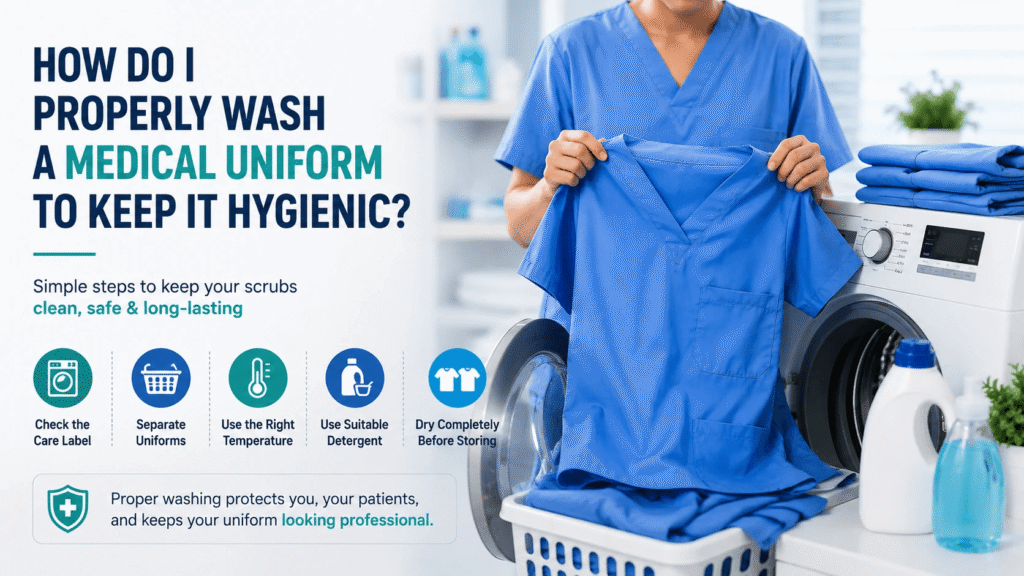
Medical uniforms and scrubs are exposed to more than everyday dirt. During a healthcare shift, uniforms can come into contact with bodily fluids, bacteria, dust, disinfectants, medicines, and other contaminants. That makes proper washing an important part of maintaining workplace hygiene.
Whether you work in a hospital, clinic, laboratory, dental practice, pharmacy, or healthcare facility, your medical uniform should be cleaned correctly after use.
At Zawaya Garments and Textiles, we manufacture and supply professional uniforms for healthcare and other industries across Dubai, Abu Dhabi, Sharjah, Ajman, Saudi Arabia, and the wider GCC. Choosing the right fabric is only the first step. Proper care helps your uniforms stay clean, comfortable, and presentable for longer.
Why Is Proper Medical Uniform Washing Important?
Washing a medical uniform correctly helps remove dirt, sweat, stains, and microorganisms that may accumulate during a working shift.
Simply putting scrubs in the washing machine is not always enough. Washing temperature, detergent, separation from other clothes, drying, and storage all affect how hygienic your uniform remains.
Healthcare workers should also follow their employer’s infection-control and laundry procedures, especially when uniforms have been exposed to potentially infectious materials.
Step 1: Change Out of Your Uniform After Your Shift
Avoid wearing your medical uniform outside the workplace whenever possible.
Changing after your shift reduces the chance of carrying workplace contaminants into your home, car, or other environments.
Place used scrubs or medical workwear in a designated laundry bag or separate hamper. Do not leave heavily soiled uniforms mixed with clean clothing.
Step 2: Check the Care Label First
Before washing any medical uniform, check the manufacturer’s care instructions.
Different fabrics can have different requirements. Some uniforms may tolerate higher washing temperatures, while others may require a gentler cycle.
Look for instructions regarding:
- Maximum washing temperature
- Machine-washing instructions
- Bleach restrictions
- Drying temperature
- Ironing
- Fabric-specific care
- Special treatment for stains
Following the care label helps maintain both hygiene and fabric quality.
Step 3: Separate Medical Uniforms From Everyday Clothing
Whenever practical, wash used medical uniforms separately from regular household clothing.
This is particularly important when the uniform is visibly soiled or has been exposed to bodily fluids or other potentially infectious substances.
If your workplace provides a professional laundry service or specific collection system, follow that procedure instead of taking contaminated clothing home.
Step 4: Use an Appropriate Detergent
Use a good-quality laundry detergent suitable for the fabric.
You do not necessarily need to use excessive amounts of detergent. More detergent does not automatically mean cleaner uniforms. Too much can leave residue on the fabric and may affect its appearance and feel.
For heavily soiled uniforms, follow the detergent manufacturer’s instructions and the garment-care instructions rather than simply adding extra detergent.
Step 5: Choose the Correct Washing Temperature
The correct washing temperature depends on the uniform fabric and the manufacturer’s instructions.
For many healthcare garments, washing at an appropriately warm temperature can help remove dirt, sweat, and microorganisms. However, you should not automatically use the hottest setting available.
Excessive heat can damage certain fabrics, shrink garments, weaken fibres, or cause colours to fade.
The safest approach is simple:
Follow the uniform’s care label and your healthcare facility’s laundry requirements.
If your facility has specific infection-control requirements, those should take priority.
Step 6: Treat Stains Before Washing
Medical uniforms can develop stains from food, medicines, disinfectants, blood, or other substances.
Treat stains as soon as possible rather than allowing them to remain in the fabric for several days.
For ordinary stains, a suitable pre-treatment product can be applied according to the product instructions and fabric-care label.
Do not experiment with harsh chemicals. Some cleaning products can damage fabric, remove colour, or create unwanted chemical reactions.
For uniforms contaminated with potentially infectious material, follow your workplace’s established decontamination procedure instead of relying on normal household stain treatment.
Step 7: Be Careful With Bleach
Bleach can damage some uniform fabrics and colours.
Never assume that bleach is safe simply because a uniform is white. Check the care label first.
If bleach is permitted, use it according to the manufacturer’s instructions. If it is not permitted, choose an alternative cleaning method that is compatible with the fabric.
Using harsh chemicals unnecessarily can shorten the life of medical uniforms.
Step 8: Dry the Uniform Thoroughly
After washing, dry the uniform completely before storing or wearing it again.
Damp clothing can develop unpleasant odours and creates an environment where microorganisms can multiply.
Depending on the garment-care instructions, you may be able to use a tumble dryer, line drying, or another appropriate drying method.
Avoid excessive heat if the fabric is not designed to tolerate it.
In the UAE and other GCC countries, air drying can be convenient, but uniforms should still be dried in a clean environment rather than in a location where they may pick up dust or contaminants.
Step 9: Store Clean Uniforms Properly
Once your medical uniform is completely dry, store it separately from used clothing.
A clean cupboard or drawer is preferable to leaving freshly washed scrubs on a chair, floor, or other exposed surface.
If you work multiple shifts, keeping several sets of medical uniforms can make it easier to rotate clean garments while reducing the temptation to reuse a uniform before it has been properly washed.
How Often Should Medical Uniforms Be Washed?
As a general workplace hygiene practice, a medical uniform should normally be changed and washed after each work shift.
However, the exact procedure depends on the healthcare environment and the level of contamination involved.
Uniforms used in hospitals, laboratories, operating environments, clinics, dental practices, and other healthcare settings may have different requirements.
Always follow your employer’s infection-control policy when it is more specific than general clothing-care advice.
What If a Medical Uniform Is Heavily Contaminated?
A heavily contaminated uniform requires more care than an ordinary dirty garment.
If clothing has been exposed to blood, bodily fluids, or potentially infectious material:
- Follow your healthcare facility’s infection-control procedure.
- Avoid shaking the garment, which can spread contaminants.
- Keep contaminated clothing separate from clean laundry.
- Use the designated laundry or disposal process where provided.
- Follow applicable workplace and healthcare laundry requirements.
Do not assume that a normal household washing cycle is appropriate for every contamination situation.
How Can You Make Medical Uniforms Last Longer?
Healthcare uniforms are washed frequently, so fabric durability matters.
When purchasing medical uniforms, consider:
- Breathable fabric for hot GCC climates
- Colourfastness
- Fabric strength
- Resistance to frequent washing
- Comfortable construction
- Easy-care properties
- Appropriate GSM and fabric weight
- Quality stitching
- Suitable sizing and fit
A cheaper uniform is not necessarily the better option if it loses its shape, colour, or strength after repeated washing.
For hospitals, clinics, and other healthcare organisations, selecting durable medical workwear can make uniform management easier over the long term.
Choosing Medical Uniforms for Healthcare Teams in the GCC
Healthcare professionals in Dubai and across the GCC often work in warm environments, making fabric selection particularly important.
A good medical uniform should balance hygiene, comfort, durability, professional appearance, and ease of maintenance.
Zawaya Garments and Textiles manufactures and supplies professional uniforms for healthcare organisations as well as corporate, hospitality, industrial, security, education, retail, and food-service businesses.
We can help businesses select suitable fabrics, designs, colours, branding, and quantities based on their operational requirements.
Final Thoughts
Properly washing a medical uniform is not complicated, but consistency matters.
Change uniforms after each shift, follow the care label, separate used workwear from clean clothing, use the correct detergent and washing temperature, treat stains appropriately, dry garments completely, and follow your workplace’s infection-control procedures for contaminated clothing.
For healthcare businesses, uniform hygiene starts before the first wash. Choosing durable, easy-care medical uniforms can make regular cleaning easier while helping staff maintain a professional appearance.
Frequently Asked Questions
Can I wash my medical scrubs with normal clothes?
It is better to keep used medical uniforms separate from everyday clothing, particularly when they are visibly soiled or potentially contaminated. Follow your workplace’s laundry and infection-control procedures.
What temperature should I use to wash medical uniforms?
Use the temperature specified on the garment’s care label and follow your employer’s healthcare laundry requirements. Do not automatically use the hottest setting, as excessive heat can damage some fabrics.
Should medical uniforms be washed after every shift?
In most healthcare workplaces, uniforms should be changed and washed after each shift. Specific requirements can vary depending on the workplace and level of contamination.
Can I use bleach on white medical uniforms?
Only use bleach if the garment’s care instructions allow it. Bleach can damage certain fabrics, fibres, and finishes even when the garment is white.
Where can I order custom medical uniforms in the UAE?
Zawaya Garments and Textiles supplies professional and custom uniforms for healthcare organisations across Dubai, Abu Dhabi, Sharjah, Ajman, Saudi Arabia, and the wider GCC. For bulk requirements, contact the team to discuss your fabric, design, branding, sizing, and quantity requirements.
Need Medical Uniforms for Your Healthcare Team?
Looking for comfortable, durable, and professionally branded medical uniforms? Contact Zawaya Garments and Textiles for a bulk quote and discuss your healthcare uniform requirements.
WhatsApp:.